The first time I made chimichurri, I chopped the parsley too fine and it turned into a green paste. The second time I left the leaves coarse and let the vinegar sit for ten minutes before the steak hit the pan, and the sauce tasted like two separate things finally agreeing. That is the version below: a rough chop, a short rest, and a flank steak seared hard on one side until it releases on its own.
Advertisements1
Flank steak is a lean, flat cut that cooks in minutes and slices into long, tender ribbons if you cut across the grain. The sauce does the heavy lifting. Parsley, oregano, garlic, red wine vinegar, and olive oil need nothing more than a whisk and a few minutes to bloom into something sharper than the sum of its parts.
I keep the seasoning on the meat simple, salt and black pepper only, because the chimichurri is already loud. What matters is the pan temperature and the rest. A steak sliced too soon loses its juice to the board, and no amount of sauce hides that.
Why You'll Love This Recipe
About the Ingredients
1.5 lb (680g) flank steak, about 1 inch thick
Ask the butcher for a flank with even thickness so it sears uniformly; skirt steak or flat iron work as substitutes, though skirt cooks in roughly half the time.
1 1/4 tsp kosher salt
Use Diamond Crystal or halve the amount if you only have fine table salt; sea salt flakes can be used but crush them first so they adhere.
3/4 tsp freshly ground black pepper
Grind coarse for a crust; pre-ground pepper works in a pinch but loses its bite after a few months in the cupboard.
1 tbsp neutral oil, such as grapeseed or canola
Avocado oil is a fine substitute for its high smoke point; avoid olive oil here since it will smoke before the pan is hot enough.
1 cup (25g) loosely packed fresh flat-leaf parsley, coarsely chopped
Curly parsley is a substitute but tastes grassier; buy bunches with stiff, upright stems and no yellowing at the base.
2 tbsp fresh oregano leaves, chopped (or 2 tsp dried)
If using dried, crumble it between your fingers to release the oils; marjoram is the closest substitute.
3 medium garlic cloves, minced (about 1 tbsp)
Fresh garlic only here; jarred garlic tastes flat and slightly sour. Look for firm cloves with no green sprout inside.
3 tbsp red wine vinegar
Sherry vinegar or white wine vinegar can stand in; balsamic is too sweet and will darken the sauce.
1/2 tsp red pepper flakes
Aleppo pepper gives a milder, fruitier heat; cayenne is far hotter, so use a quarter teaspoon.
1/2 cup (120ml) extra-virgin olive oil
A fruity, peppery oil matters more than an expensive one; reserve the good bottle for finishing, not cooking.
1/4 tsp granulated sugar
Balances the vinegar's edge; honey works but use a scant quarter teaspoon and whisk well.
Tips & Tricks
Dry the Surface Before Searing
Pat the steak thoroughly with paper towels, because any moisture steams instead of browning and you lose the crust.
Slice Against the Grain Every Time
Look for the lines running lengthwise and cut perpendicular to them at a slight angle, or the steak will chew tough.
Let the Sauce Sit Before Serving
Ten minutes of resting lets the vinegar soften the raw garlic and the herbs release their color into the oil.
Pro Tips
Step-by-Step Instructions
1. Make the Chimichurri
In a medium bowl, combine the parsley, oregano, garlic, red wine vinegar, red pepper flakes, sugar, and 1/2 teaspoon of the salt. Whisk in the olive oil in a slow stream until the sauce looks glossy and slightly thickened, then set it aside for at least 10 minutes at room temperature. It should smell sharply of garlic and vinegar, with the herbs still distinct.
2. Dry and Season the Steak
Pat the flank steak dry on both sides with paper towels, then season evenly with the remaining 3/4 teaspoon salt and all the black pepper. Let it sit uncovered for 10 minutes while you heat the pan; the surface should look tacky, not wet.
3. Heat the Pan Hard
Set a 12-inch cast iron skillet over high heat for 3 to 4 minutes, until a drop of water flicked in sizzles and evaporates within a second. Add the neutral oil and swirl to coat; it should shimmer almost immediately.
4. Sear the First Side
Lay the steak in the pan away from you and press it flat with tongs for 5 seconds so it makes full contact. Cook undisturbed for 4 minutes at 450F to 475F (230C to 245C) pan temperature, until the underside is deeply browned and releases on its own.
5. Flip and Finish
Flip the steak and cook 3 to 4 minutes more for medium-rare, until an instant-read thermometer inserted into the thickest part reads 130F to 135F (54C to 57C). The surface should be dark brown with faint char at the edges and the meat should feel springy, not firm.
6. Rest the Meat
Transfer the steak to a warm plate or board and let it rest 8 to 10 minutes. The internal temperature will climb about 5F (3C) as it sits, and the juices will redistribute so they stay in the slice.
7. Slice Against the Grain
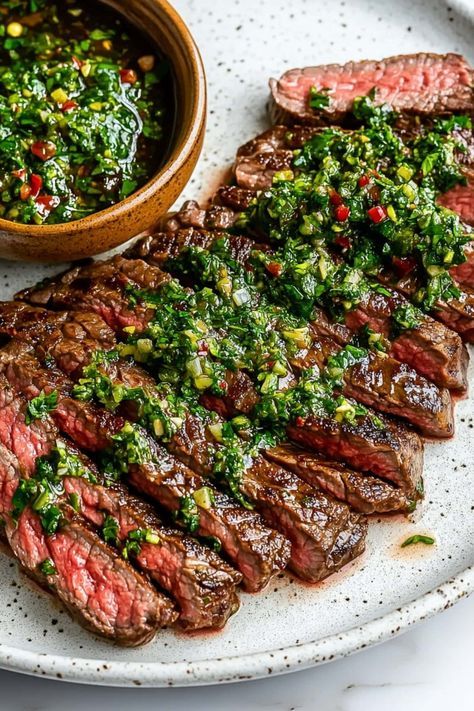
Find the direction of the muscle fibers and cut perpendicular to them into 1/2-inch slices, holding the knife at a slight diagonal. The slices should look glossy and pink in the center with a dark crust along the top edge.
8. Serve with the Sauce
Arrange the slices on a platter, spoon a few tablespoons of chimichurri over the top, and pass the rest at the table. Serve within 5 minutes, while the crust is still firm.
Delicious Variations
Grilled Version
Cook the steak over a 500F (260C) grill for 4 to 5 minutes per side, which gives a smokier char and lets the chimichurri stay raw and bright.
Chimichurri Chicken Thighs
Swap the flank for 2 lb of boneless thighs, searing 6 minutes per side at 425F (220C); the sauce cuts through the richer meat.
Add a Charred Scallion
Grill or blister 4 scallions and chop them into the chimichurri for a sweeter, smokier sauce that suits a winter table.
How to Store Quick & Easy Chimichurri Steak
Refrigerator
Store the sliced steak in an airtight container for up to 3 days and the chimichurri separately for up to 5 days; keep the sauce in a small jar so the herbs stay submerged in oil.
Freezer
Freeze cooked steak slices in a single layer on a tray, then transfer to a bag for up to 2 months; do not freeze the chimichurri, as the parsley turns dark and limp.
Reheating
Reheat the steak gently in a 300F (150C) oven for 6 to 8 minutes, or eat it cold in a sandwich; add fresh chimichurri after reheating rather than before.
Frequently Asked Questions
Q: What is the best cut of steak for chimichurri?
Flank steak is the best cut for chimichurri because it is lean, flat, and cooks evenly in a hot pan. Skirt steak and flat iron are close substitutes, though skirt is thinner and needs about half the cooking time.
Q: Should chimichurri be served cold or at room temperature?
Serve chimichurri at room temperature, not cold from the fridge, because the olive oil thickens and the flavors flatten when chilled. Take it out 15 minutes before serving and give it a stir.
Q: How do I keep flank steak from being tough?
Slice flank steak against the grain, meaning perpendicular to the long muscle fibers, and do not cook it past medium. Resting the meat for 8 to 10 minutes before slicing also keeps the juices in the meat rather than on the board.
Q: Can I make chimichurri ahead of time?
Yes, chimichurri can be made up to 3 days ahead and kept covered in the refrigerator. The garlic gets sharper over time, so if it tastes too strong, stir in another tablespoon of olive oil before serving.
Q: What do you serve with chimichurri steak?
Serve chimichurri steak with roasted potatoes, crusty bread, or a simple green salad, since the sauce is bold enough to carry plain sides. A scoop of white rice also works well to soak up the herb oil.
If you make this, watch how the sauce changes color after ten minutes and tell me whether you liked it better fresh or the next day. See you on the long way home.
Quick & Easy Chimichurri Steak
Quick & Easy Chimichurri Steak pairs a hard-seared flank steak with bright, garlicky herb sauce for a fresh, restaurant-style dinner at home.
🧂 Ingredients
- 1.5 lb (680g) flank steak, about 1 inch thick
- 1 1/4 tsp kosher salt
- 3/4 tsp freshly ground black pepper
- 1 tbsp neutral oil, such as grapeseed or canola
- 1 cup (25g) loosely packed fresh flat-leaf parsley, coarsely chopped
- 2 tbsp fresh oregano leaves, chopped (or 2 tsp dried)
- 3 medium garlic cloves, minced (about 1 tbsp)
- 3 tbsp red wine vinegar
- 1/2 tsp red pepper flakes
- 1/2 cup (120ml) extra-virgin olive oil
- 1/4 tsp granulated sugar
📋 Instructions
- 1Make the Chimichurri — In a medium bowl, combine the parsley, oregano, garlic, red wine vinegar, red pepper flakes, sugar, and 1/2 teaspoon of the salt. Whisk in the olive oil in a slow stream until the sauce looks glossy and slightly thickened, then set it aside for at least 10 minutes at room temperature. It should smell sharply of garlic and vinegar, with the herbs still distinct.
- 2Dry and Season the Steak — Pat the flank steak dry on both sides with paper towels, then season evenly with the remaining 3/4 teaspoon salt and all the black pepper. Let it sit uncovered for 10 minutes while you heat the pan; the surface should look tacky, not wet.
- 3Heat the Pan Hard — Set a 12-inch cast iron skillet over high heat for 3 to 4 minutes, until a drop of water flicked in sizzles and evaporates within a second. Add the neutral oil and swirl to coat; it should shimmer almost immediately.
- 4Sear the First Side — Lay the steak in the pan away from you and press it flat with tongs for 5 seconds so it makes full contact. Cook undisturbed for 4 minutes at 450F to 475F (230C to 245C) pan temperature, until the underside is deeply browned and releases on its own.
- 5Flip and Finish — Flip the steak and cook 3 to 4 minutes more for medium-rare, until an instant-read thermometer inserted into the thickest part reads 130F to 135F (54C to 57C). The surface should be dark brown with faint char at the edges and the meat should feel springy, not firm.
- 6Rest the Meat — Transfer the steak to a warm plate or board and let it rest 8 to 10 minutes. The internal temperature will climb about 5F (3C) as it sits, and the juices will redistribute so they stay in the slice.
- 7Slice Against the Grain — Find the direction of the muscle fibers and cut perpendicular to them into 1/2-inch slices, holding the knife at a slight diagonal. The slices should look glossy and pink in the center with a dark crust along the top edge.
- 8Serve with the Sauce — Arrange the slices on a platter, spoon a few tablespoons of chimichurri over the top, and pass the rest at the table. Serve within 5 minutes, while the crust is still firm.

Reports on urban cycling and everyday transport choices, writing about routes, gear, and the small decisions that make commuting safer. His angle is observation: what he notices on repeated trips and what changes with weather and season. He avoids advocacy and sticks to what he has seen.