
The most common mistake with this plate is cooking the steak and the potatoes on the same timeline, which means cold mashed potatoes or an overcooked sirloin. Potatoes first, always. They hold heat under a lid while you sear, and the steak rests while you build the gravy in the same pan.
Advertisements1
This is a white plate topped with sliced seared meat, buttery mashed potatoes and blistered asparagus, served next to a cup of dark pan gravy. Nothing on it is fancy. Everything on it is timed.
You need a cast iron skillet or a heavy stainless pan, a potato masher, and a small saucepan. A cheap ricer from a thrift store beats a food processor for the potatoes, which turns them to glue.
Why You'll Love This Recipe
About the Ingredients
2 1/2 lb (1.1 kg) Yukon Gold potatoes, peeled and cut into 2-inch chunks
Yukon Golds mash creamier than russets with less butter. If you only have russets, add 2 extra tablespoons of butter to keep them from turning dry.
6 tbsp (85 g) unsalted butter, divided
Split it: 4 tablespoons for the mash, 2 for the pan sauce. Salted butter works but pull back the added salt by half.
3/4 cup (180 ml) whole milk, warmed
Warm milk absorbs into hot potatoes without seizing. Half-and-half makes them richer; skim milk makes them sad.
6 sirloin steaks, about 6 oz (170 g) each, 1 inch thick
Sirloin is the value pick here; ribeye is more forgiving if you tend to overcook. Look for steaks of even thickness so they finish together.
1 1/2 tsp kosher salt, plus more for the potato water
Kosher salt seasons more evenly than table salt. If using fine table salt, cut the amount by a third.
1 tsp freshly ground black pepper
Grind it coarse for a crust that grips the meat. Pre-ground pepper burns faster in a hot pan.
1 1/2 lb (680 g) asparagus, woody ends snapped off
Snap one spear to find the natural break point, then cut the rest to match. Thin spears cook in 4 minutes; fat ones need 6.
1 tbsp olive oil
Use it for the asparagus, not the steak. Avocado oil is a fine swap if your pan runs hot.
1 cup (240 ml) low-sodium beef broth
Low-sodium lets you control the seasoning. Chicken broth works in a pinch but gives a lighter sauce.
1 tbsp all-purpose flour
This thickens the pan gravy. Cornstarch also works, but whisk it into cold broth first or it clumps.
Tips & Tricks
Salt the steak early, not late
Season 30 to 40 minutes ahead and leave it at room temperature so the salt penetrates and the surface dries for a better crust.
Keep potato water in reserve
Save a cup of the starchy cooking water and add it back instead of extra milk if the mash looks stiff.
Do not crowd the pan
Sear the steaks in two batches if your skillet is smaller than 12 inches, or they steam instead of browning.
Tent and rest
Cover the steaks loosely with foil for 5 minutes; slicing too early drains the juices onto the plate instead of into the meat.
Pro Tips
Step-by-Step Instructions
1. Boil the potatoes
Cover the potato chunks with cold water by 1 inch, add a big pinch of salt, and bring to a boil over high heat. Reduce to a steady simmer and cook 15 to 18 minutes at 200F (93C), until a knife slides in with no resistance.
2. Sear the steaks
Pat the steaks dry and season. Heat a cast iron skillet over medium-high until it just smokes, about 3 minutes, then sear 3 to 4 minutes per side at 400F (204C) pan temperature for medium-rare. Pull them at 130F (54C) internal and tent with foil.
3. Mash while hot
Drain the potatoes, keeping 1 cup of the cooking water. Mash with 4 tablespoons butter and the warm milk, loosening with potato water as needed, until smooth and glossy. Cover and keep warm.
4. Blister the asparagus
Toss the spears with olive oil, salt and pepper. In the still-hot skillet over medium-high, cook 4 to 5 minutes at 400F (204C), turning once, until the spears are bright green with charred spots and bend slightly when lifted.
5. Build the pan gravy
Lower the heat to medium. Melt the remaining 2 tablespoons butter in the skillet, whisk in the flour, and cook 1 minute until it smells nutty. Pour in the broth and whisk 3 to 4 minutes at 200F (93C) until it coats the back of a spoon.
6. Plate and serve
Spoon the mash onto plates, slice the rested steak against the grain, and lay it over the potatoes with the asparagus alongside. Pour the gravy into a small cup and serve immediately.
Delicious Variations
Garlic Herb Mash
Stir 2 minced garlic cloves and 1 tablespoon chopped rosemary into the butter before mashing for a punchier plate.
Chimichurri Switch
Skip the gravy and spoon a bright parsley-garlic-vinegar sauce over the sliced steak instead.
Chicken Version
Swap the sirloin for 6 boneless chicken thighs, seared 6 minutes per side to 175F (79C), and use chicken broth in the pan sauce.
How to Store Steak, Mashed Potatoes and Asparagus with Pan Gravy
Refrigerator
Store components separately in airtight containers for up to 3 days; keep the gravy in its own jar so the potatoes do not turn soupy.
Freezer
Freeze the mashed potatoes in a sealed container for up to 2 months; the steak and asparagus do not freeze well and lose texture.
Reheating
Reheat potatoes with a splash of milk over low heat, warm the steak gently in a covered pan at 300F (149C) for 5 minutes, and reheat gravy on the stovetop with a whisk.
Frequently Asked Questions
Q: What temperature should steak be for medium-rare?
Pull the steak at 130F (54C) internal temperature and rest it 5 minutes; carryover heat brings it to about 135F (57C). For medium, aim for 140F (60C) before resting.
Q: Can I make mashed potatoes ahead of time?
Yes, mash them up to 2 hours ahead and hold them in a covered pot over the lowest possible heat with a splash of milk. Stir occasionally so the bottom does not scorch.
Q: How do I keep asparagus from getting mushy?
Cook it hot and fast, 4 to 5 minutes at 400F (204C), and pull it while it is still bright green and slightly firm. Thick spears need the extra minute; thin ones do not.
Q: Why is my pan gravy lumpy?
You added liquid too fast or skipped whisking the flour into the fat first. Whisk the flour into the butter for a full minute, then add broth in a slow stream while whisking constantly.
Q: Can I use a different cut of steak?
Yes, ribeye, strip or flat iron all work at the same 1-inch thickness and timing. Tougher cuts like flank need a longer rest and thinner slicing against the grain.
Get the potatoes on before anything else, and the rest of this plate falls into place without panic. Cook it once and the timing becomes muscle memory. Measure twice, then measure again.
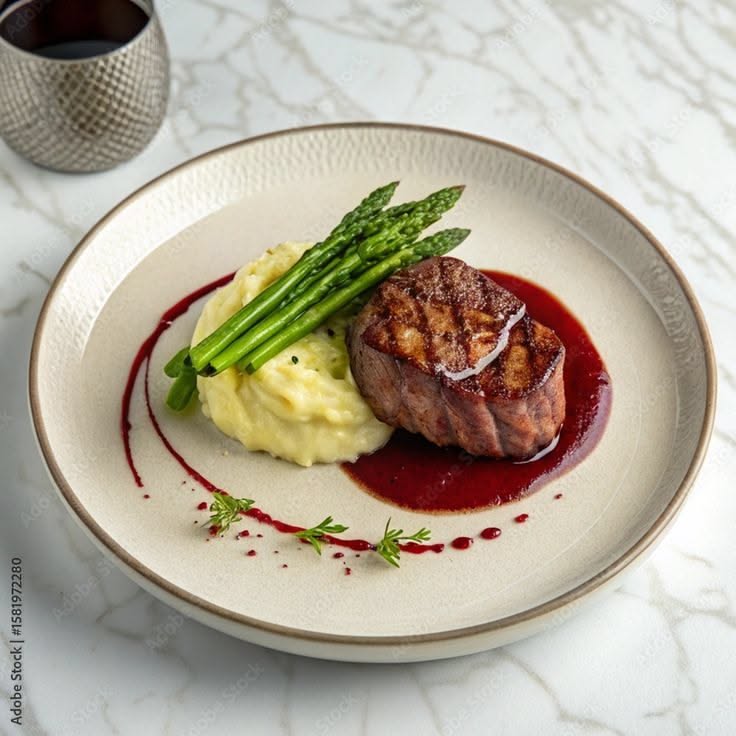
Steak, Mashed Potatoes and Asparagus with Pan Gravy
Steak, mashed potatoes and asparagus on one white plate delivers a buttery pan-seared sirloin dinner with creamy spuds and crisp green spears.
🧂 Ingredients
- 2 1/2 lb (1.1 kg) Yukon Gold potatoes, peeled and cut into 2-inch chunks
- 6 tbsp (85 g) unsalted butter, divided
- 3/4 cup (180 ml) whole milk, warmed
- 6 sirloin steaks, about 6 oz (170 g) each, 1 inch thick
- 1 1/2 tsp kosher salt, plus more for the potato water
- 1 tsp freshly ground black pepper
- 1 1/2 lb (680 g) asparagus, woody ends snapped off
- 1 tbsp olive oil
- 1 cup (240 ml) low-sodium beef broth
- 1 tbsp all-purpose flour
📋 Instructions
- 1Boil the potatoes — Cover the potato chunks with cold water by 1 inch, add a big pinch of salt, and bring to a boil over high heat. Reduce to a steady simmer and cook 15 to 18 minutes at 200F (93C), until a knife slides in with no resistance.
- 2Sear the steaks — Pat the steaks dry and season. Heat a cast iron skillet over medium-high until it just smokes, about 3 minutes, then sear 3 to 4 minutes per side at 400F (204C) pan temperature for medium-rare. Pull them at 130F (54C) internal and tent with foil.
- 3Mash while hot — Drain the potatoes, keeping 1 cup of the cooking water. Mash with 4 tablespoons butter and the warm milk, loosening with potato water as needed, until smooth and glossy. Cover and keep warm.
- 4Blister the asparagus — Toss the spears with olive oil, salt and pepper. In the still-hot skillet over medium-high, cook 4 to 5 minutes at 400F (204C), turning once, until the spears are bright green with charred spots and bend slightly when lifted.
- 5Build the pan gravy — Lower the heat to medium. Melt the remaining 2 tablespoons butter in the skillet, whisk in the flour, and cook 1 minute until it smells nutty. Pour in the broth and whisk 3 to 4 minutes at 200F (93C) until it coats the back of a spoon.
- 6Plate and serve — Spoon the mash onto plates, slice the rested steak against the grain, and lay it over the potatoes with the asparagus alongside. Pour the gravy into a small cup and serve immediately.

Covers do-it-yourself home repair and tool maintenance, writing from the perspective of someone who prefers fixing over replacing. His angle is troubleshooting: what to check first, what to leave alone, and when a job is genuinely out of reach. He writes for renters and first-time homeowners alike.